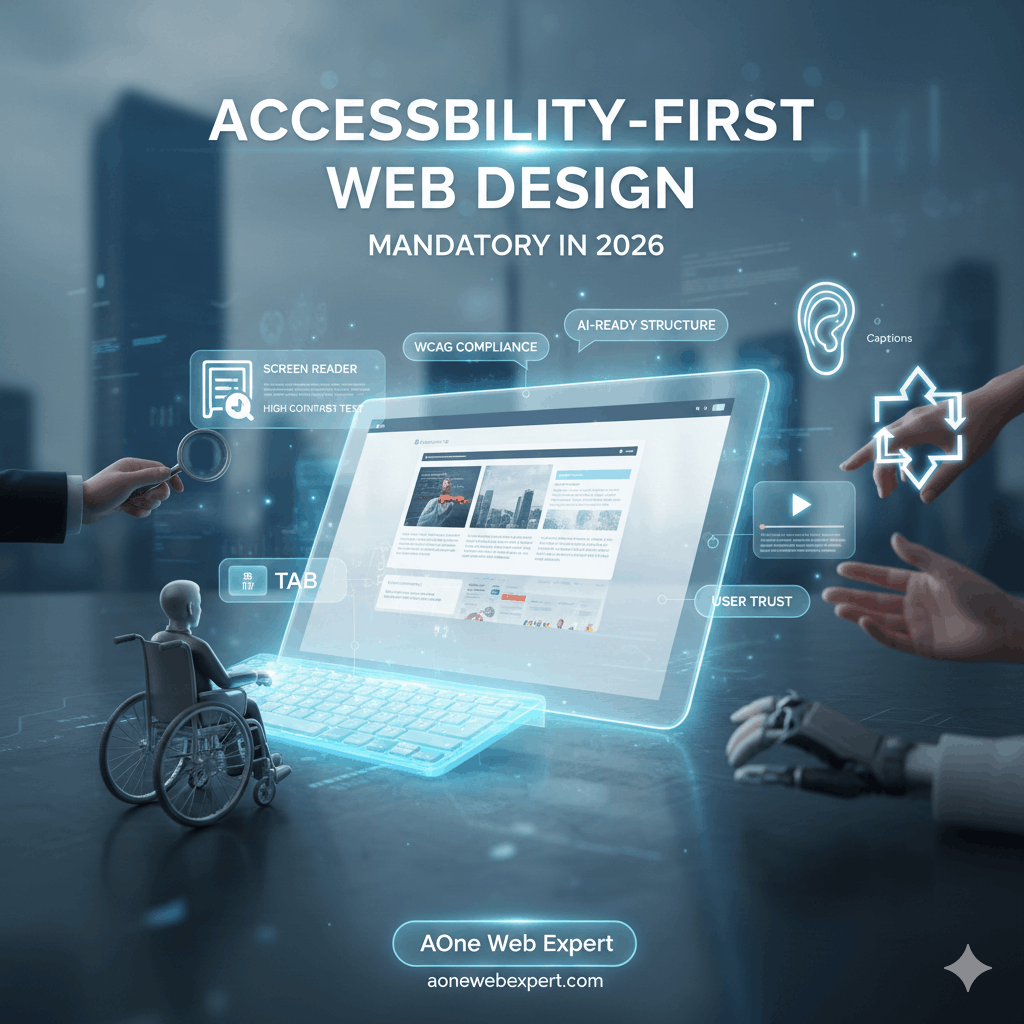
Accessibility-First Web Design: Why It’s Mandatory in 2026
In 2026, building a website is no longer just about good looks or fast speed. Accessibility-first web design has become a must, not an option.
Search engines, governments, and users now expect websites to work for everyone — including people with disabilities. If your website is not accessible, you can lose traffic, rankings, customers, and even face legal trouble.
Let’s understand what accessibility-first web design means and why it is mandatory in 2026.
What Is Accessibility-First Web Design?
Accessibility-first web design means creating websites that can be used by all people, including those who have:
Vision problems (blindness, low vision, color blindness)
Hearing loss
Mobility issues
Learning or cognitive difficulties
Instead of adding accessibility later, it is planned from the start — during design, development, and content creation.
Example:
Text that screen readers can read
Buttons that work with keyboard only
Colors that are easy to see
Videos with captions
Why Accessibility Is Mandatory in 2026
1. New Laws & Legal Risk
Many countries have strengthened digital accessibility laws based on WCAG (Web Content Accessibility Guidelines).
In 2026:
Government websites must be accessible
Many private businesses are now legally required to comply
Lawsuits against inaccessible websites are increasing
If your site fails accessibility checks, it can lead to:
Legal notices
Fines
Forced redesigns
2. Google Prefers Accessible Websites
Google’s goal is to give the best experience to users. Accessibility improves:
Page clarity
Content structure
Navigation
User satisfaction
Accessible websites usually have:
Proper headings
Alt text for images
Clean HTML
Faster loading
All these help with SEO rankings.
This is why modern SEO agencies like AOne Web Expert build websites that follow accessibility and SEO together.
👉 https://aonewebexpert.com
3. AI Search & Voice Assistants Need Accessibility
In 2026, users search using:
Voice assistants
AI answers
Screen readers
Smart devices
AI systems understand websites better when:
Content is structured
Labels are clear
Images have descriptions
If your site is not accessible, AI may ignore your content, reducing visibility in AI-based search results.
4. Better User Experience = More Conversions
Accessibility helps everyone, not just people with disabilities.
Examples:
Clear text helps mobile users
Keyboard navigation helps power users
Good contrast helps people in sunlight
Captions help people in noisy places
Result:
Lower bounce rate
More time on site
Higher conversions
5. Accessibility Builds Brand Trust
Users trust brands that care about inclusion.
An accessible website shows:
Professionalism
Responsibility
User-first thinking
Businesses that invest in accessibility are seen as future-ready and customer-friendly.
Key Accessibility Features Every Website Needs in 2026
Here are some basics your website must have:
Proper heading structure (H1, H2, H3)
Alt text for all images
Keyboard-friendly navigation
Readable font size
High color contrast
Accessible forms with labels
Captions for videos
Error messages that are easy to understand
If this feels technical, working with an expert team matters.
How AOne Web Expert Helps Businesses Stay Compliant
At AOne Web Expert, accessibility is not an add-on — it’s part of the core design strategy.
They focus on:
Accessibility-first UI/UX
SEO-friendly structure
AI-ready content layout
WCAG-aligned development
Whether you are building a new website or fixing an old one, their team ensures your site is 2026-ready.
Learn more here 👉 https://aonewebexpert.com