When people hear about your business, the first thing they usually do is search for your website. If what they find is slow, confusing, or outdated, they often leave within seconds. That’s why developing a website properly is so important—it directly affects how people see your brand and whether they choose to trust you.
In this article, we’ll explain what website development means, why it matters, the key steps involved, and how professional website development can make a real difference.
What Does It Mean to Develop a Website?
To develop a website means creating a fully functional online platform that users can visit, browse, and interact with. It goes beyond just design. Website development includes:
Planning the structure of the website
Designing layouts and visuals
Writing and integrating code
Adding features and functionality
Making the site fast, secure, and mobile-friendly
A well-developed website works smoothly, loads quickly, and helps users find what they need without frustration.
Why Website Development Is Important for Businesses
A website is your digital office that stays open 24/7. Here’s why proper website development is critical:
1. Builds Trust and Credibility
People trust businesses with professional websites. A slow, broken, or outdated site can drive users away instantly.
2. Improves Visibility
Search engines prefer websites that are technically sound, fast, and well-structured. Good development supports better SEO rankings.
3. Enhances User Experience
A well-developed website is easy to navigate, clear to understand, and pleasant to use—keeping visitors engaged longer.
4. Increases Conversions
From contact forms to online purchases, website development directly impacts how easily users can take action.
Key Steps to Develop a Website
1. Planning and Strategy
Before writing any code, you need clarity:
Who is the target audience?
What is the website’s main goal?
What features are required?
Planning helps avoid costly changes later.
2. Website Design
Design focuses on how the website looks and feels. This includes:
Layout and structure
Color schemes and branding
Fonts and spacing
Button placement and visuals
Good design supports usability and brand identity.
3. Front-End Development
Front-end development handles what users see and interact with. This includes:
HTML for structure
CSS for styling
JavaScript for interactivity
The goal is to make the website responsive and visually consistent across devices.
4. Back-End Development
Back-end development manages how the website works behind the scenes. It includes:
Databases
Server logic
Content management systems
User authentication
This ensures the website functions properly and handles data securely.
5. Content Integration
Content is a major part of website development. This includes:
Text content
Images and videos
Blogs and service pages
Forms and CTAs
Content should be clear, helpful, and optimized for search engines.
6. Testing and Quality Checks
Before launch, the website must be tested for:
Speed and performance
Mobile responsiveness
Browser compatibility
Broken links and errors
Testing ensures users have a smooth experience from day one.
7. Launch and Maintenance
After launch, regular updates are needed to:
Fix bugs
Improve performance
Update content
Enhance security
Website development is not a one-time task—it’s an ongoing process.
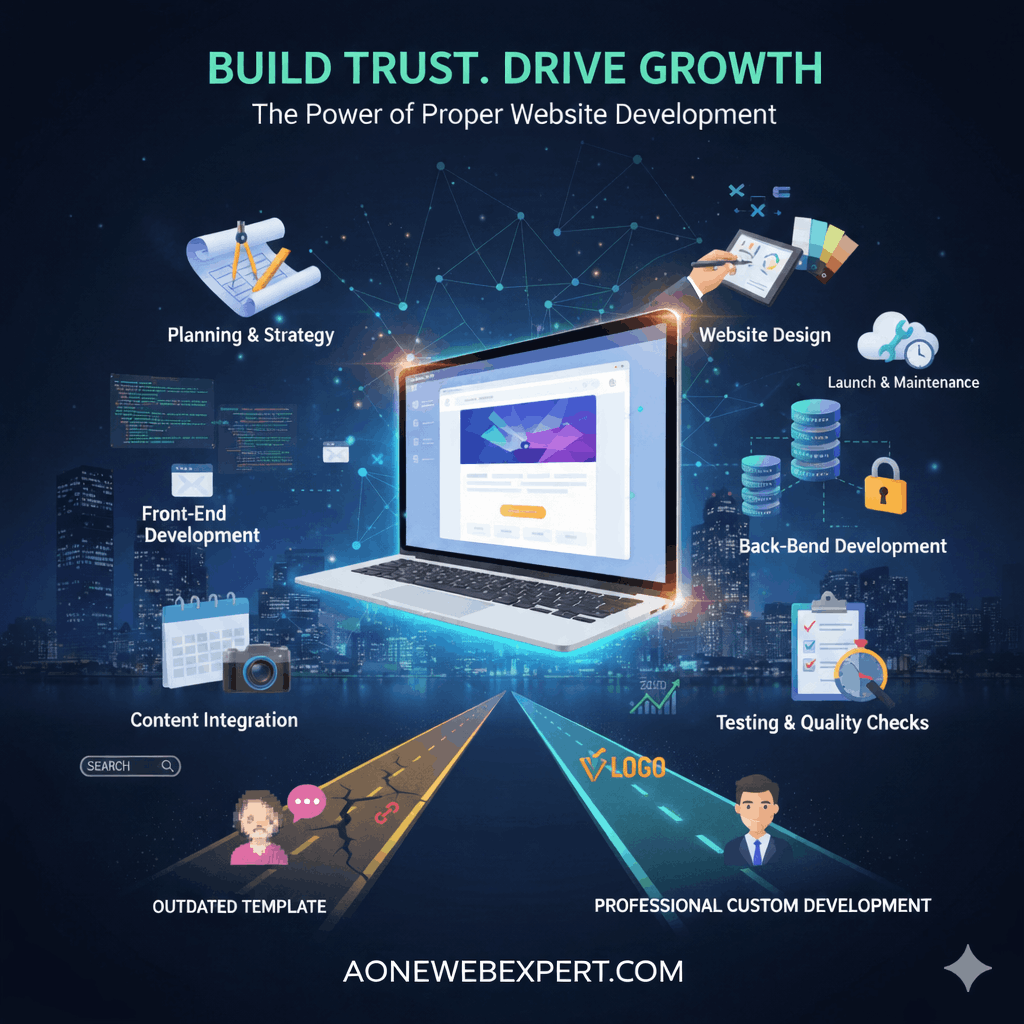
Custom Website Development vs Templates
Many businesses ask whether to use templates or build a custom website.
Templates
Faster to launch
Lower upfront cost
Limited customization
Custom Website Development
Designed specifically for your business
Better performance and scalability
Stronger branding and SEO
For long-term growth, custom development often delivers better results.
Website Development and SEO Go Hand in Hand
A well-developed website supports SEO in many ways:
Clean code structure
Fast loading speed
Mobile optimization
Proper URL structure
Secure HTTPS setup
Search engines reward websites that provide a good user experience.
Professional development ensures your site is technically ready to rank.
Why Choose a Professional Website Development Company
While DIY tools exist, professional website development offers clear advantages:
Strategic planning based on business goals
Clean, scalable code
SEO-friendly architecture
Ongoing support and maintenance
If you want a website that not only looks good but also performs well, expert help matters.
At https://aonewebexpert.com/, we specialize in developing websites that are fast, secure, user-friendly, and optimized for growth. Our team focuses on combining strong design with solid development to create websites that truly work for businesses.
Future Trends in Website Development
Website development continues to evolve. Some key trends include:
AI-powered personalization
Faster frameworks and performance optimization
Mobile-first and voice-friendly designs
Improved accessibility standards
Staying updated with these trends helps businesses stay competitive online.
To develop a website is to create a digital foundation for your business. From planning and design to development and maintenance, every step matters. A well-developed website improves visibility, builds trust, and turns visitors into customers.
If you’re looking to develop a professional website that delivers real results, partnering with experts makes all the difference.
👉 Visit https://aonewebexpert.com/ to start building a website that supports your business growth today.